


Net Promoter Score (NPS) is a widely used metric that helps businesses gauge customer loyalty and satisfaction. Understanding the meaning and importance of NPS is crucial for any organization aiming to improve its customer experience and foster long-term growth.
What is NPS?
NPS, or Net Promoter Score, is a metric used to measure customer loyalty and satisfaction. It gauges the likelihood of customers recommending a business or product to others. The score is based on a single question: “On a scale of 0 to 10, how likely are you to recommend our company/product/service to a friend or colleague?”
Why is NPS Important?
NPS is vital for eCommerce businesses because it directly measures customer satisfaction. In addition, NPS is a valuable metric for several reasons:
- Predictive Power: NPS is strongly correlated with business growth. Understanding and leveraging NPS can result in higher customer loyalty and retention, increased revenue, and a solid brand reputation.
- Benchmarking: NPS helps eCommerce companies benchmark their performance against competitors, driving continuous improvement and long-term growth.
- Actionable Insights: NPS feedback helps identify areas of improvement required to enhance the customer experience and address customer pain points.
How is NPS Calculated?
Customers are categorized into three groups based on their responses:
- Promoters (9-10): Loyal customers and brand enthusiasts who will keep buying and refer others, fueling growth.
- Passives (7-8): Satisfied but unenthusiastic customers who are vulnerable to competitive offerings.
- Detractors (0-6): Unhappy customers who can damage your brand through negative word-of-mouth.
To calculate the NPS, subtract the percentage of Detractors from the percentage of Promoters:
The image below is a visual representation of how to calculate NPS:
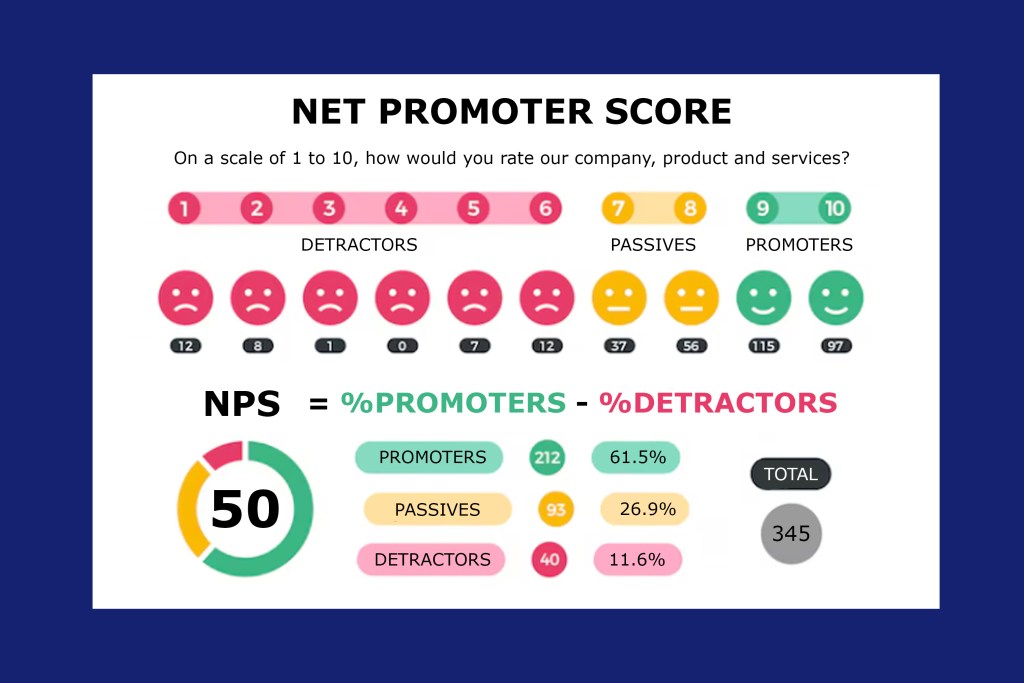
For example, the company referenced above received a total of 345 responses to their NPS survey. 61.5% were Promoters, 26.9% Passives, and 11.6% Detractors. By subtracting the 11.6% Detractors from the 61.5% Promoters, the company’s NPS score is 50. See the formula outlined below:
The score ranges from -100 to +100. A positive NPS indicates more Promoters than Detractors, suggesting good customer loyalty.
What is a High NPS Score?
A high NPS indicates strong customer loyalty, leading to repeat purchases, positive word-of-mouth, and an excellent brand reputation.
- Generally, an NPS score above +50 is considered excellent. It indicates a high level of customer loyalty and satisfaction.
- Scores above +70 are exceptional, reflecting a strong positive brand perception and a large number of loyal Promoters.
What is a Low NPS Score?
A low NPS score suggests that there are significant areas for improvement in customer satisfaction and loyalty.
- Scores between 0 and +20 are usually considered low.
- An NPS score below 0 is considered poor, indicating that the number of Detractors exceeds the number of Promoters.
Strategies to Improve NPS
Improving your NPS requires a strategic approach focused on enhancing the overall customer experience. Here are some strategies to consider:
1. Deliver Exceptional Customer Service
Outstanding customer service is the cornerstone of high NPS. Train your customer support team to be responsive, empathetic, and knowledgeable. Address customer issues promptly and strive to exceed their expectations. Although an appeasement program may incur costs, it can be a valuable strategy to consider. Investing in such programs helps convert dissatisfied customers (Detractors) into loyal Promoters by addressing their concerns and improving their experience. This proactive approach can enhance customer satisfaction and contribute to long-term business success.
2. Personalize the Customer Experience
Personalization strategies can make customers feel valued and understood. The best personalization strategies to improve NPS and customer satisfaction include tailoring product recommendations based on customer preferences, offering personalized promotions and discounts, and using targeted communication channels including targeted email marketing campaigns. Implementing personalized post-purchase experiences, such as customized thank-you emails or follow-up offers, can also enhance the customer journey. Additionally, leveraging customer data to anticipate needs and proactively address issues further strengthens loyalty and satisfaction.
3. Act on Customer Feedback
Use NPS surveys to collect actionable feedback. Pay close attention to the comments from Detractors, Passives, and Promoters to understand their perspectives. Identify common themes and take proactive steps to address concerns and enhance the customer experience. It’s crucial to communicate your improvements based on this feedback to demonstrate to your customers that you value their opinions and are committed to their satisfaction. This not only helps in retaining existing customers but also fosters loyalty and trust, encouraging them to become long-term advocates for your brand. Regularly updating and refining your products or services based on feedback can lead to continuous improvement and sustained growth.
4. Enhance Product Quality
A high-quality product is essential for creating loyal customers. Continuously improve your product based on customer feedback and market trends. Leverage internal search data and customer feedback to gain insights into what your customers are seeking. Integrate these insights into your product assortment or services to meet customer demands effectively. Ensure that your product meets or exceeds customer expectations in terms of functionality, durability, and usability. Enhancing product quality by continuously refining and improving based on customer preferences can significantly boost your NPS.
5. Streamline the User Experience
A seamless and intuitive user experience can significantly impact customer satisfaction. Optimize your website, mobile app, and other digital touchpoints to ensure ease of use. Leverage heatmapping tools to gain insights into your customers’ behavior and identify friction points in their journey. By visualizing where users click, scroll, and spend the most time, you can pinpoint areas that need improvement and optimize the overall user experience. This data-driven approach enables you to enhance site navigation, page content, search refinement PLP filters, and minimize friction points such as complicated checkout processes or slow page loads. By optimizing the user experience, you can significantly enhance customer satisfaction and increase conversion rates.
7. Utilize Customer Loyalty Programs
Implement loyalty programs to reward repeat customers. A loyalty program should offer personalized rewards, exclusive discounts, and early access to new products or sales to increase customer satisfaction. It should also provide a straightforward, easy-to-use system for earning and redeeming points. Offering special perks on birthdays or anniversaries can make customers feel valued. Additionally, loyalty programs can include referral bonuses to encourage customers to spread the word about your brand. Regularly updating the rewards to keep them relevant and attractive ensures continuous customer engagement and satisfaction. Loyal customers are more likely to become Promoters and advocate for your brand.
Conclusion
Understanding the meaning of NPS and its importance is crucial for any business aiming to improve customer loyalty, retention, and satisfaction. By implementing strategies such as delivering exceptional customer service, personalizing the customer experience, and acting on feedback, businesses can enhance their NPS and drive long-term success. Embrace a customer-centric approach and continuously strive to exceed customer expectations to turn your customers into loyal Promoters.


Leave a comment